You Can't Think Your Way Out of a Thinking Problem
You know the feeling. You've been at your screen for hours, toggling between tools, reviewing outputs, and iterating on something that was probably good enough two versions ago. You close your laptop and realize you can't recall what you actually accomplished. There's a fog. A buzzing. Not physical tiredness exactly, but something heavier: the sense that your mind has been running at full capacity all day and has nothing left to give.
If you're an executive or leader in a technology company, you’re probably nodding because this feels familiar. And you're probably also telling yourself it's just the nature of the work.
It isn't. Or rather, it doesn't have to be.
The Acceleration Is Real. The Cost Is Measurable.
The world is changing faster than ever before, and it’s not likely to slow down anytime soon. That's not a new observation. Every technological revolution creates a similar tension: the promise of making work easier colliding with the reality that it also makes work harder in ways we didn't expect. But AI is different in one important way: it doesn't just change what we do. It changes the cognitive texture of how we work.
A recent Boston Consulting Group study of nearly 1,500 workers put numbers to what many of us have been feeling. Fourteen percent of AI users reported experiencing what the researchers call "AI brain fry": acute mental fatigue from overseeing AI tools beyond their cognitive capacity. Workers described a buzzing sensation, mental fog, difficulty focusing, and slower decision-making.
The downstream effects are significant. Those experiencing this cognitive overload reported 33% more decision fatigue and 39% higher rates of serious errors at work. Perhaps most telling for any leader concerned about talent retention: intent to quit jumped by 39% among this group. These aren't disengaged employees. They're often the most driven, most capable people on the team.
And it isn't only AI. Research on workplace attention tells a broader story. A study published in Harvard Business Review found that the average knowledge worker toggles between applications and websites nearly 1,200 times per day, losing roughly five working weeks per year to context switching alone. Microsoft's 2025 Work Trend Index reported that 80% of workers don't have enough time or energy to do their jobs effectively.
The tools promised to make us more efficient. In many ways, they have. But they've also created an environment in which sustained, focused thinking has become the exception rather than the norm.
Why High Achievers Are Especially Vulnerable
Here's where it gets personal. The leaders most at risk are not the ones who resist technology. They're the ones who embrace it most fully, the ones who hold themselves to the highest standards, and the ones who have a hard time letting "good enough" be good enough.
Research on perfectionism and burnout reveals a pattern familiar to many executives. Psychologists distinguish between two dimensions of perfectionism: perfectionistic strivings (setting high standards, pursuing excellence) and perfectionistic concerns (fear of failure, harsh self-criticism, anxiety about others' expectations). The striving dimension, on its own, tends to be adaptive. It's the engine of high performance.
But the concerns dimension is where the damage happens. Meta-analytic research by Hill and Curran found that perfectionistic concerns are strongly associated with burnout symptoms, including exhaustion and cynicism. Fear of failure creates a cycle: leaders overwork to avoid mistakes, exhaust themselves in the process, make more errors as a result, and then double down even harder. Corporate cultures that reward flawlessness and penalize risk-taking reinforce this loop.
AI amplifies this pattern in a specific way. Because the marginal cost of one more iteration with an AI tool feels close to zero, the perfectionist's instinct to refine, check, and re-check finds almost no natural stopping point. You can always ask it to try again. You can always review one more output. The cognitive cost accumulates invisibly until the system crashes.
As one senior engineering manager described it in the BCG study, he realized he was working harder to manage the tools than to actually solve the problem. That moment of recognition is the turning point. But most people never reach it, because they're too deep inside the pace to see it clearly.
Burnout Is More Than You Think
The BCG study drew an interesting distinction: AI use didn't predict increased burnout. In fact, when AI replaced repetitive tasks, burnout scores dropped by 15%. But the researchers treated burnout and cognitive overload as separate phenomena.
My experience as a coach tells me the line between them is less clean than that.
The World Health Organization defines burnout as a syndrome resulting from chronic workplace stress that has not been successfully managed. That's a useful starting point, but it can lead us to think of burnout primarily in terms of emotional and physical exhaustion.
In my burnout coaching work, drawing on the Maslach research tradition and the framework taught in my certification program, we see burnout as an energy drain that can show up across five realms: physical, emotional, mental, social, and spiritual. Most leaders I work with are depleted in more than one of these simultaneously. The physical exhaustion is obvious. But what about the growing sense of disconnection from colleagues (social)? The creeping cynicism about whether the work matters (spiritual)? The inability to hold a complex thought after 3 p.m. (mental)? The emotional flatness that makes it hard to care about anything, even things that used to light you up?
These dimensions interact. Cognitive overload doesn't stay neatly contained in the "mental" category. Over time, it erodes your emotional resilience, your capacity for connection, and your sense of meaning. The person who started the year excited about what AI could make possible may end it wondering why nothing feels rewarding anymore.
That's not two separate problems. That's one problem showing up in multiple places.
The Observer Gap
So why don't people catch this earlier? Why do intelligent, self-aware leaders run past their own limits without noticing?
Because you can't observe a system you're fully embedded in.
Carl Jung put it simply: "Until you make the unconscious conscious, it will direct your life, and you will call it fate."
This is the crux of it. Most leaders experiencing cognitive overload and early-stage burnout are trying to solve the problem from inside the problem. They optimize their calendar. They batch their AI interactions. They try a new productivity app. These are all interventions at the level of doing. They don't address the deeper issue, which is one of seeing: the inability to observe your own patterns, reactions, and thresholds as they happen.
In Ontological Coaching, we call this second-order learning. First-order learning is acquiring new skills or information. Second-order learning is becoming a better observer of yourself: seeing the assumptions, habits, and automatic responses that shape how you show up in the world. It's the difference between learning a new technique for managing your inbox and recognizing that your compulsive relationship with email is driven by a fear of missing something important, which is itself driven by a deeper belief that your value depends on being responsive.
That second layer is where real change happens. And it's exactly what gets sacrificed when your cognitive bandwidth is consumed by the pace of work.
Why Meditation Matters (and Not for the Reason You Think)
This is where my role as a meditation teacher intersects with my coaching practice.
Most people think of meditation as a relaxation technique. Something to take the edge off. A way to decompress after a hard day. And it can be that. But reducing meditation to stress relief misses its deeper function.
Meditation is the foundational practice for building observer capacity. When you sit in meditation, you're training the ability to notice what's happening inside you while it's happening: the thought arising, the tension in the body, the impulse to act, the emotion surfacing. You're not trying to stop any of it. You're learning to see it without being swept away by it.
This is not soft science. A meta-analysis of 111 randomized controlled trials published in Health Psychology Review found that mindfulness-based interventions significantly improved executive attention, sustained attention accuracy, and overall cognitive functioning. Neuroscience research has shown that meditation modulates activity in the locus coeruleus-noradrenaline system, the brain region critical for attentional control, and that even 30 days of guided practice can produce measurable improvements in cognitive focus.
In practical terms, meditation trains exactly the capacity that intensive AI use depletes: the ability to sustain attention, resist distraction, and notice when you've crossed a threshold. It's the practice of becoming aware of the buzzing before it becomes fog. Of feeling depletion before it becomes a breakdown.
And here's the part that matters for leaders: this capacity doesn't just help you manage your energy. It transforms how you lead. A leader who can observe their own reactivity in real time makes better decisions under pressure. A leader who notices their own perfectionist patterns can interrupt them before they cascade through the team. A leader who can sit with uncertainty without immediately reaching for a tool to resolve it creates space for the kind of original thinking that AI cannot replace.
The Case for Stepping Away
Everything I've described so far points in one direction: you cannot rebuild the capacity for clear thinking while remaining inside the environment that depleted it. You need distance. Not as escape, but as intervention.
This is what my Swiss Mountain Retreats are designed to be. Not a vacation. Not a wellness getaway. A deliberate act of stepping outside the pace so you can see it, and yourself within it, with fresh eyes.
The format is simple and intentional. A small group of leaders. Morning meditation as the mist clears from the valley and lake below. Coaching conversations on trails above the treeline. Quiet, interrupted only by the wind in the trees and distant cowbells. The kind of silence that lets you hear your own thinking again.
Over the course of several days in this environment, something shifts. The mental fog lifts, not because you willed it away, but because you removed the conditions that created it. And in that clearing, you start to see patterns you couldn't see before: what's been driving your pace, what you've been avoiding, what actually matters to you beneath the noise of urgency.
You return to your work with something more valuable than rest. You return with the capacity to observe yourself in action, to notice when you're approaching a threshold, and to make a different choice. That's not a one-time insight. It's a practice, and the retreat is where you learn to do it in a way that integrates into your daily life.
An Invitation
The pace of work and technological change isn't slowing down any time soon. But you can.
If what I've described resonates with where you are right now, or if it describes someone you know who's been running at a pace that concerns you, I'd welcome you to explore what a few days in the Swiss Alps might make possible.
Our May retreat has a handful of spots remaining.
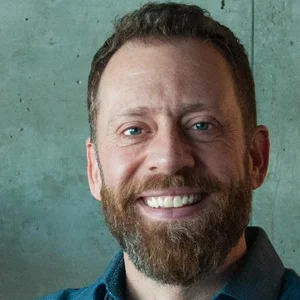
David Perry is an Ontological Executive Leadership Coach and Mindfulness Meditation Teacher based in Zürich, Switzerland. He works with leaders navigating complexity, overwhelm, and the human dimensions of technological change. Learn more at purecoach.me.
References
Bedard, Kropp, Hsu, Karaman, Hawes & Kellerman. "When Using AI Leads to 'Brain Fry.'" Harvard Business Review, March 5, 2026. https://hbr.org/2026/03/when-using-ai-leads-to-brain-fry
Murty, Dadlani & Das. "How Much Time and Energy Do We Waste Toggling Between Applications?" Harvard Business Review, August 2022. https://hbr.org/2022/08/how-much-time-and-energy-do-we-waste-toggling-between-applications
Microsoft 2025 Work Trend Index: "The Year the Frontier Firm Is Born." Based on a survey of 31,000 workers across 31 countries. https://www.microsoft.com/en-us/worklab/work-trend-index/2025-the-year-the-frontier-firm-is-born
Hill, A.P. & Curran, T. (2016). "Multidimensional Perfectionism and Burnout: A Meta-Analysis." Perspectives on Psychological Science, 11(2), 284-300. https://pubmed.ncbi.nlm.nih.gov/26231736/
Zainal, N.H. & Newman, M.G. (2023). "Mindfulness Enhances Cognitive Functioning: A Meta-Analysis of 111 Randomized Controlled Trials." Health Psychology Review, 18(2), 369-395. https://pmc.ncbi.nlm.nih.gov/articles/PMC10902202/
Kim et al. (2025). "The Effects of Mindfulness Meditation on Mechanisms of Attentional Control in Young and Older Adults." eNeuro, 12(7). https://www.eneuro.org/content/12/7/ENEURO.0356-23.2025